Why did the US join the war?
The us joined the war because Woodrow Wilson wanted to make the league of nations and create a safe place for democracy and economic growth. Major events like the Zimmerman Telegram and the sinking of the Lusitania
What aspect of the US involvement were subject for debate?
Entering the war was a large debate, and also the question if the US's economy could withstand the war.
What was the US's involvement like?
The Us was involved with the war for a short period of time, the war didn't have much of a cost on the US's economy. There was a large military struggle, but only for a few years.
How was the US affected by participation in the war?
The US's economy was boosted, and led into the roaring 20's. Made the US a major world force, and created the League of Nations to prevent wars like WW1 from happening again.
Monday, April 24, 2017

Friday, April 21, 2017
US History – WWI Big Questions
US
History – WWI Big Questions
·
Why
did the US get involved in WWI?
o
What
major events had shapes its readiness to participate in global issues?
o
How
had it become prepared to participate in modern warfare overseas?
·
What
aspects of US involvement were the subject of debate?
·
For
the US, what was involvement in WWI like?
·
How
was the US affected by its participation in WWI?
1.
1st Image: Says in large letters "Dont stop saving food" in large white letters. blue background made by the US government. Blue background, with several sheets of paper behind it.
2nd image: Says "Food is ammunition, dont waste it". has a large basket of food behind the text. it also has several american soldiers behind on horses, with an american flag.
3rd Image: says "I summon you to the comradeship" with a drawing of Woodrow Wilson behind it. Has a Red Cross at the bottom.
4th Image: says "Little american do your bit" and promoted kids to eat oatmeal. shows a child saluting a bowl of oatmeal, looking very happy about it.
2.
1st Image: the intent of this image is to promote people saving their food so the soldiers can have as much as possible
2nd Image: this poster promotes people saving food and shows soldiers in the back, showing the person seeing this that its for a good cause.
3rd Image: this image is promoting friendship with the word "comradeship" showing Wilson's fight for world peace
4th Image: this poster is trying to show the little kids of america that they can help the cause as well. They want people to eat oats instead of wheat because the soldiers ate the wheat
3.
1st image: the artist is using large words to show the reader how important this is, and is assuming that the reader will realize this is a big problem
2nd image: the artist assumes that the reader will see the soldiers in the back holding the american flag, showing them that this is a fight for freedom
3rd Image: the artist is assuming that the reader know that Wilson is fighting for freedom, and that he wants to stay out of the war
4th Image: the artist is assuming that the reader is young, or a parent of a child, showing that everyone can help with the cause
4. (How they differ from the last group)
the last assignment all my images tried to guilt people into following their message, while this one shows the end goal/cause for what the poster is promoting.
1st Image: Says in large letters "Dont stop saving food" in large white letters. blue background made by the US government. Blue background, with several sheets of paper behind it.
2nd image: Says "Food is ammunition, dont waste it". has a large basket of food behind the text. it also has several american soldiers behind on horses, with an american flag.
3rd Image: says "I summon you to the comradeship" with a drawing of Woodrow Wilson behind it. Has a Red Cross at the bottom.
4th Image: says "Little american do your bit" and promoted kids to eat oatmeal. shows a child saluting a bowl of oatmeal, looking very happy about it.
2.
1st Image: the intent of this image is to promote people saving their food so the soldiers can have as much as possible
2nd Image: this poster promotes people saving food and shows soldiers in the back, showing the person seeing this that its for a good cause.
3rd Image: this image is promoting friendship with the word "comradeship" showing Wilson's fight for world peace
4th Image: this poster is trying to show the little kids of america that they can help the cause as well. They want people to eat oats instead of wheat because the soldiers ate the wheat
3.
1st image: the artist is using large words to show the reader how important this is, and is assuming that the reader will realize this is a big problem
2nd image: the artist assumes that the reader will see the soldiers in the back holding the american flag, showing them that this is a fight for freedom
3rd Image: the artist is assuming that the reader know that Wilson is fighting for freedom, and that he wants to stay out of the war
4th Image: the artist is assuming that the reader is young, or a parent of a child, showing that everyone can help with the cause
4. (How they differ from the last group)
the last assignment all my images tried to guilt people into following their message, while this one shows the end goal/cause for what the poster is promoting.
Wednesday, April 19, 2017
WWI Poster Analysis
1. Propaganda is artwork made to unite people against a common enemy
2. information, ideas, or rumors deliberately spread widely to help or harm a person, group, movement, institution, nation, etc.
http://www.dictionary.com/browse/propaganda
3. Set 6 Images 1-3 (https://drive.google.com/file/d/0B-7jsJa5YaWrSWpZS3B6c3BJRjg/view)
4.
1st image: this picture shows a mother holding her babies, while they are crying. The poster says on the side "Must children die and mothers plead in vain?" At the bottom it is promoting people to buy liberty bonds, so the US could save these poor mothers from the grasp of Germany. The women in this picture is holding one of her arms up, maybe to surrender or shield her family from something. She is also surrounded by trash and pots all around her as if her house was ransacked.
2nd Image: This image is also promoting liberty bonds, saying "For you- they are giving their lives over there for them- you must give every cent you can spare." The picture shows a women covered in the american flag pointing across the ocean at a war torn area with bombs going off. She seems to resemble the Statue of Liberty sitting just off the cost. The women is holding her hand out to the US, as if she is asking for more war bonds.
3rd Image: This image shows a dead soldier holding his rifle with the text "His liberty bond paid in full" at the top and bottom of the poster. At the bottom there is a paragraph talking about this boys last sacrifice to his country, and how we need more liberty bonds to have enough people to take his place when he falls.
5.
1st image: the intent of this message is to get people to buy war bonds by trying to make people have empathy for the poor people in Europe, who need to be freed by US forces.
2nd Image: This image again asks for war bonds, showing Europe in war, with the women looking sad as if we are going to lose the fight. This is also using guilt or empathy to try and get people to buy war bonds
3rd Images: The intent of this image was to have people buy war bonds, so we would have enough money to train soldiers to take his place in the fight.
6.
1st image: The artist assumes that the people will feel bad for this women, and that they are likely in a family so they can have empathy for this women
2nd Image: This artist assumes that the people know of the horrible things happening in Europe, and that people will feel bad for the soldiers and buy war bonds
3rd Image: The artist is assuming that the people seeing this will read the bottom paragraph and know that the US needs their money to keep fighting the war. The people are also supposed to feel bad, seeing this dead soldier laying on the ground, fighting for his country.
7. I don't like the idea of the government spending tax money, to try and convince people to donate money. The government put the US into the war that the citizens might not even want to fight in, already using their tax dollars for the war.
8. The government thought it was necessary to make these posters, because they knew the impact the war would have on the US's economy, and that they didn't have enough money to fight the war.
2. information, ideas, or rumors deliberately spread widely to help or harm a person, group, movement, institution, nation, etc.
http://www.dictionary.com/browse/propaganda
3. Set 6 Images 1-3 (https://drive.google.com/file/d/0B-7jsJa5YaWrSWpZS3B6c3BJRjg/view)
4.
1st image: this picture shows a mother holding her babies, while they are crying. The poster says on the side "Must children die and mothers plead in vain?" At the bottom it is promoting people to buy liberty bonds, so the US could save these poor mothers from the grasp of Germany. The women in this picture is holding one of her arms up, maybe to surrender or shield her family from something. She is also surrounded by trash and pots all around her as if her house was ransacked.
2nd Image: This image is also promoting liberty bonds, saying "For you- they are giving their lives over there for them- you must give every cent you can spare." The picture shows a women covered in the american flag pointing across the ocean at a war torn area with bombs going off. She seems to resemble the Statue of Liberty sitting just off the cost. The women is holding her hand out to the US, as if she is asking for more war bonds.
3rd Image: This image shows a dead soldier holding his rifle with the text "His liberty bond paid in full" at the top and bottom of the poster. At the bottom there is a paragraph talking about this boys last sacrifice to his country, and how we need more liberty bonds to have enough people to take his place when he falls.
5.
1st image: the intent of this message is to get people to buy war bonds by trying to make people have empathy for the poor people in Europe, who need to be freed by US forces.
2nd Image: This image again asks for war bonds, showing Europe in war, with the women looking sad as if we are going to lose the fight. This is also using guilt or empathy to try and get people to buy war bonds
3rd Images: The intent of this image was to have people buy war bonds, so we would have enough money to train soldiers to take his place in the fight.
6.
1st image: The artist assumes that the people will feel bad for this women, and that they are likely in a family so they can have empathy for this women
2nd Image: This artist assumes that the people know of the horrible things happening in Europe, and that people will feel bad for the soldiers and buy war bonds
3rd Image: The artist is assuming that the people seeing this will read the bottom paragraph and know that the US needs their money to keep fighting the war. The people are also supposed to feel bad, seeing this dead soldier laying on the ground, fighting for his country.
7. I don't like the idea of the government spending tax money, to try and convince people to donate money. The government put the US into the war that the citizens might not even want to fight in, already using their tax dollars for the war.
8. The government thought it was necessary to make these posters, because they knew the impact the war would have on the US's economy, and that they didn't have enough money to fight the war.
Thursday, March 23, 2017
Birmingham Field Trip
1. I was expecting to see several pictures of people being sprayed by hoses and getting attacked by the police. I also expected to see lots of exhibits on Martin Luther King Jr. I was expecting to see sever things about the KKK, and some of the actions they did.
2. I learned about the way in which the black population was different than the white population. This was shown in the exhibits like the difference in schools for blacks and whites. It was also apparent in the child mortality rate that where the black mortality rate was higher than the white's.
3. The thing that stood out was the case of the belongings of the children who died in the bombing. It was hard to thing that these were all things that belonged to someone who died in the bombing. It was also shocking to find the rock that killed one of the kids, knowing that it took the child's life.
Thursday, February 9, 2017
Our Future
The future of the world is largely going to be determined by the explorers and entrepreneurs of the world. Greed and necessary are the driving forces of innovation in this world and i feel this is going to shape the world for the better or worse in the future. We have very little control over what we need in the world to overcome nature, and other natural forces. Some of the innovations will be forced by man mad events like global warming or other kinds of pollution. The future is on a path to try and make human life as easy as possible with innovations to make life more sustainable in the world. We have control of most of our future now with the technology of today, but we will always have some unexpected changes we have to make.
Sunday, February 5, 2017
Philanthropy from 1880-1920
Grayson Thurman
February 6, 2017
History B Block
Philanthropists
Philanthropy from 1880-1920
The industrial revolution brought about a large number of extremely wealthy people, but also brought a new class of poor people-factory workers. Ellis island on a busy day in 1907 admitted over ten thousand immigrants into America. These new immigrants came to America to work and were happy taking low paying jobs in factories. The gap between the rich and poor grew every day, and the populations of both classes grew.

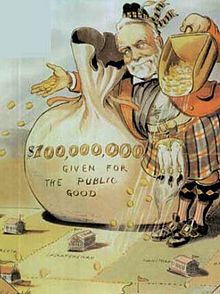
The biggest philanthropist, and riching man in the world was Andrew Carnegie. He donated 90% of his fortian by 1910 to help the United States grow in many ways.
Carnegie was a big believer in making the education in America the best in the world. He gave over 2,000 libraries to the united states. He also made his own prestigious university Vanderbilt. Vanderbilt was a large believer in giving people tools to help them self but never to do all the work for them. He wanted to give people an opportunity to help themselves, fitting because this is how Carnegie grew up. Carnegie was raised alongside a very wealthy man in the railroad industry and was given several opportunities to make a name for himself. These large donations weren’t just for the US, Carnegie made several foundations based in the US and around the world to promote world peace.  He was the person who started organizations like the UN and some of his buildings he donated are still in use today.
He was the person who started organizations like the UN and some of his buildings he donated are still in use today.
Some of the donations made by these millionaires had the ability to completely wipe out problems in the US. Rockefeller gave millions of dollars to Public Health organizations, and laid the foundations for the Public Health Agency created by the United States government. Rockefeller is credited with single handedly wiping out hookworm in places like the south. 
Here you see whites and black getting treatment for hookworm, a major problem in the south. Rockefeller gave most of the money he donated to areas in the south. He is one of the main contributors for make the south a more accepting place for blacks, and women, who were at a severe disadvantage in these times. All the money Rockefeller gave went to places that did not discriminate in any way, whether that be a school made for whites and black, men and women; all these places give all groups of people an equal chance to improve their way of life.
Not all philanthropists gave money to extremely large areas of the US or world, some people were more devoted to their own home town. WK Kellogg was inspired by an event in his own personal life to try and make a change in his area that he grew up. In 1913 Kellogg’s grandson Kenneth Williamson fell out of a 2nd story window, and was seriously injured and paralyzed. When Kellogg tried to get medical help in his hometown he found none or a lack thereof. WK Kellogg then set out to help public health and education in all of Michigan. Many of the reasons why the largest philanthropists in the US gave so much money was because of an experience they had in their earlier life.
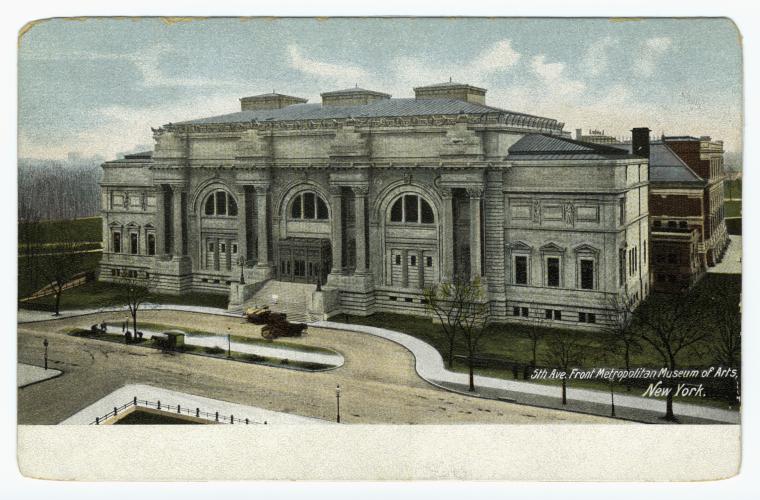
Some of the more ignored philanthropists like JP Morgan was because he didn't give money to the better well being of the United States, but rather to help in cultural expeditions. JP Morgan gave money to places like the Metropolitan Museum in New York. He turned the Metropolitan Museum from just another art museum to one of the most elaborate art museums in all of the United States.

JP Morgan was said to have an art collection that rivaled all the large art museums in europe. When he died all his art was donated to the Metropolitan Museum, making it the best art museum in the United States. JP morgan is less known for these donations to the culture of america because of how he helped the US government create several organizations like the Federal Reserve.
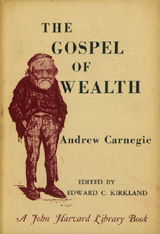
The united states will forever be changed by these few people, who gave most of their fortians to the United States. These extremely wealthy people believed it was their responsibility to make the world a better place than it was when they came into it. People like Carnegie believed in this the most, to the point where he wrote books on it like “The Gospel of Wealth” 
The United States will forever be reaping the benefits of the early days of the country and the people who gave up their fortians, for the improvement of their country, and tried to leave their mark on the world.
Work Sited
https://www.jstor.org/stable/23882495?seq=1#page_scan_tab_contents


Subscribe to:
Comments (Atom)