9/27/2016
Ward
It is possible for people to learn about events and famous people from movies better than just reading a book. With movies, you get to see their perspective on the subject and their life in general. If the movie is based on factual events and people without changing anything drastically you can learn a lot faster from watching a movie then you can while reading a book.
In the first quarter at Randolph we watched 2 movies, one of which was 12 Years a Slave we learned the story of Solomon Northrup and his life during the 12 years he was enslaved. We didn't just watch the movie from start to finish; we stopped the movie and talked about the movie almost as much as we did watching it, keeping the students engaged and participating. We learned how hard it was to be a slave and that they were punished for the smallest things or even punished just for the owners pleasure, just for being black. We learned a new aspect of the slave trade: it's not just people being born into slavery; people are kidnapped and imported from the north into slavery, and stripped of their rights and taking them to a place were their opinion and lives don't matter to the people living there. In the movie 12 Years a Slave Solomon was shown on boats and being transferred around the country, and there is documentation showing that he was taken on these voyages on the boat. The same people on the boat in real life as those in the movie. Some small things were changed to show viewers Solomon's hopes and his attempts to become free such as overthrowing the people on the boat but his hopes are crushed every time he tries to get himself freed. In the movie, you see a sailor trying to rape a women who was kidnapped into the slave trade about to get raped by one of the white sailors and then Solomon's friend and fellow accomplice to his escape is stabbed by the sailor and dies in the movie. In real life he got smallpox and dies and so do Solomon's dream to overthrow the ship. It didn't have a major change on the story as Solomon's friend dies in both versions, just in different ways: showing the pain the slaves had to deal with on a day to day basis and the terrible ways they are treated.
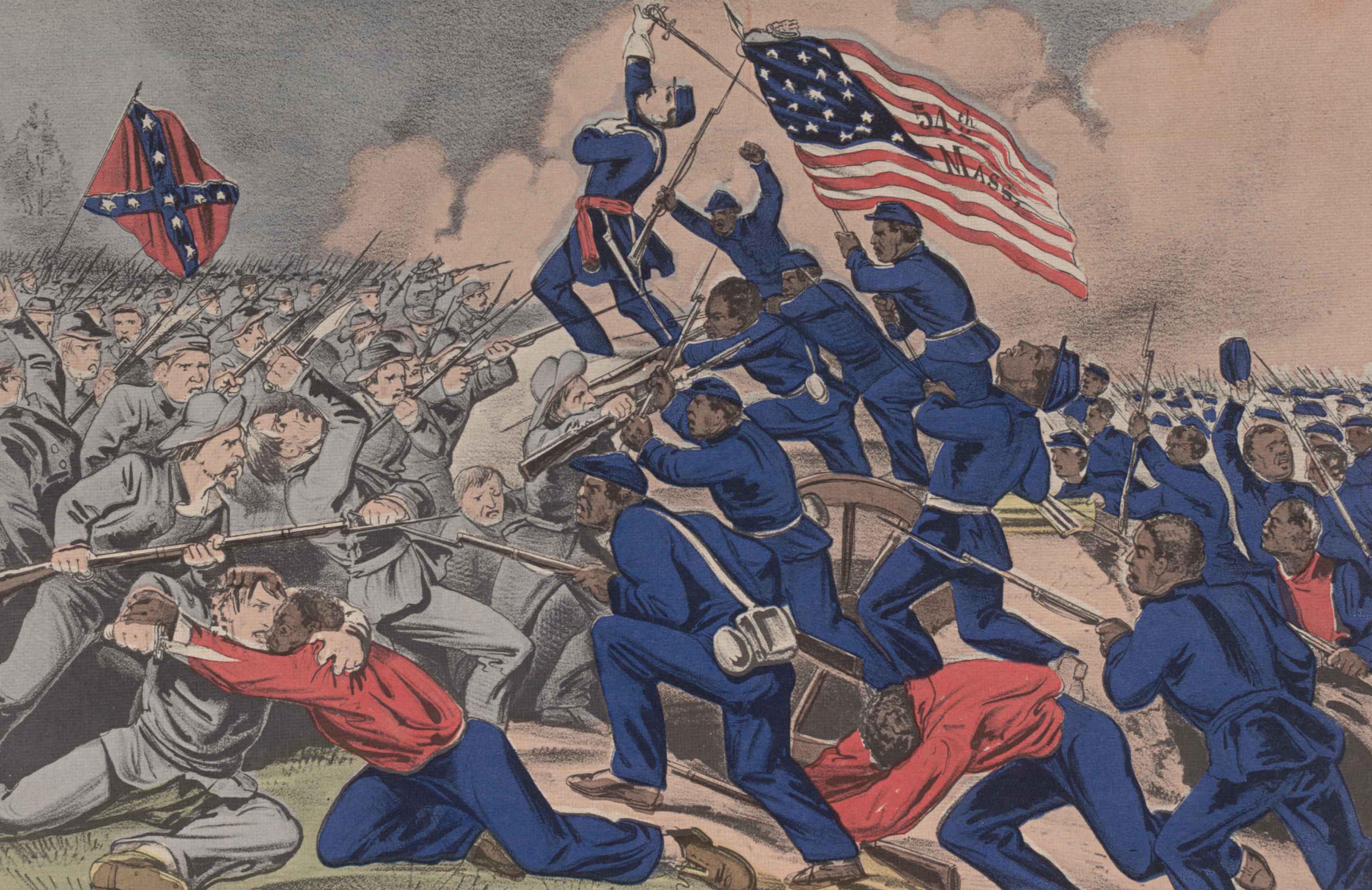
When we watched Glory, it was mainly to get an idea of the ethics during the Civil War, and the blatant racism on both sides of the war. The stereotypical thought of the Civil War is North good, South bad. The South is bad because they were racists is what most people think, but after watching Glory I now know that both sides were very racist and Northern generals didn't even trust the black soldiers to fight for them, and didn't believe African Americans could be trained to fight. Glory accurately showed the day to day life of the Massachusetts 54th and their role in the military. The movie showed the soldiers not having enough supplies and how they were trained for battle, even though the Northern Generals never thought they would go into battle, and just be used for manual labor and a publicity stunt. The movie also showed the lack of morals some of the higher ranking people in the Union military had; when Montgomery made Robert send his men into a town to ransack it when it had no military purpose, and burn it to the ground. Robert had to send his men in because if he didn't Montgomery would bring Robert up on charges and leave Robert's men in the hands of Montgomery who doesn't care about their lives. Glory does over-dramatized some scenes, such as the charge on Fort Wagoner. During the charge the viewers watch as most of the black men charging the fort are killed and only a few people make it into the fort who are then all killed once inside. In reality only 281 men died out of the 600 who charged the fort. I believe the director exaggerated this scene to try and get people to think the soldiers all died for nothing. The viewer sees a zoomed-out Fort Wagoner and still sees the Confederate flag hanging over it while the soldiers are all getting buried in a mass grave. The movie shows that the War wasn't as straight forward we think of it now with most people just thinking "north good south bad" but shows a first person perspective on the situation. Movies such as Glory based on a persons diary or letters can be very accurate and can show what the moral was like back then.
The problem comes when a filmmaker has to decide if he or she wants it to be historically accurate or filling theaters; that's when movies start to turn away from the realistic approach and start adding things that might not have happened, or filmmakers might think that something is too brutal for people to be sitting in a movie theater to watch. Some directors might need to keep their movie at a lower rating so that more people can go and see the movie, there is a huge gap between possible viewers in R rated movies and PG - 13 rated movies, and be forced to leave some non PG things out. In the movies we watched there were a very minimum amount of exaggerations added to the movie, and the things that were added to the movies were based on real events. For example when Patsy never asked Solomon to kill her but she was severely depressed.


Works Cited
Freeman, John. “12 Years a Slave True Story - Real Solomon Northup, Edwin Epps.” HistoryvsHollywood.com, History vs Hollywood, http://www.historyvshollywood.com/reelfaces/12-years-a-slave.php.
Freeman, John. “12 Years a Slave True Story - Real Solomon Northup, Edwin Epps.” HistoryvsHollywood.com, History vs Hollywood, http://www.historyvshollywood.com/reelfaces/12-years-a-slave.php.
Herskovitz, Marshall, and Kevin Jarre. “Glory.” Glory (1989), Rotten Tomatoes , 20 Nov. 2005, https://www.rottentomatoes.com/m/1008415-glory/.
Ridley, John. “12 Years a Slave.” 12 Years a Slave (2013), Roton Tomato, 18 Sept. 2012, https://www.rottentomatoes.com/m/12_years_a_slave/.
Wickman, Forrest. “How Accurate Is 12 Years a Slave? Here’s What’s Fact and What’s Fiction.” Slate Magazine, Slater, 17 Oct. 2013, http://www.slate.com/blogs/browbeat/2013/10/17/_12_years_a_slave_true_story_fact_and_fiction_in_mostly_accurate_movie_about.html.
