Grayson Thurman
February 6, 2017
History B Block
Philanthropists
Philanthropy from 1880-1920
The industrial revolution brought about a large number of extremely wealthy people, but also brought a new class of poor people-factory workers. Ellis island on a busy day in 1907 admitted over ten thousand immigrants into America. These new immigrants came to America to work and were happy taking low paying jobs in factories. The gap between the rich and poor grew every day, and the populations of both classes grew.

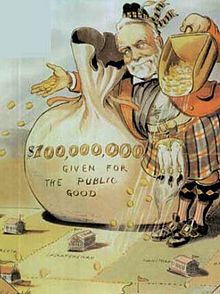
The biggest philanthropist, and riching man in the world was Andrew Carnegie. He donated 90% of his fortian by 1910 to help the United States grow in many ways.
Carnegie was a big believer in making the education in America the best in the world. He gave over 2,000 libraries to the united states. He also made his own prestigious university Vanderbilt. Vanderbilt was a large believer in giving people tools to help them self but never to do all the work for them. He wanted to give people an opportunity to help themselves, fitting because this is how Carnegie grew up. Carnegie was raised alongside a very wealthy man in the railroad industry and was given several opportunities to make a name for himself. These large donations weren’t just for the US, Carnegie made several foundations based in the US and around the world to promote world peace.  He was the person who started organizations like the UN and some of his buildings he donated are still in use today.
He was the person who started organizations like the UN and some of his buildings he donated are still in use today.
Some of the donations made by these millionaires had the ability to completely wipe out problems in the US. Rockefeller gave millions of dollars to Public Health organizations, and laid the foundations for the Public Health Agency created by the United States government. Rockefeller is credited with single handedly wiping out hookworm in places like the south. 
Here you see whites and black getting treatment for hookworm, a major problem in the south. Rockefeller gave most of the money he donated to areas in the south. He is one of the main contributors for make the south a more accepting place for blacks, and women, who were at a severe disadvantage in these times. All the money Rockefeller gave went to places that did not discriminate in any way, whether that be a school made for whites and black, men and women; all these places give all groups of people an equal chance to improve their way of life.
Not all philanthropists gave money to extremely large areas of the US or world, some people were more devoted to their own home town. WK Kellogg was inspired by an event in his own personal life to try and make a change in his area that he grew up. In 1913 Kellogg’s grandson Kenneth Williamson fell out of a 2nd story window, and was seriously injured and paralyzed. When Kellogg tried to get medical help in his hometown he found none or a lack thereof. WK Kellogg then set out to help public health and education in all of Michigan. Many of the reasons why the largest philanthropists in the US gave so much money was because of an experience they had in their earlier life.
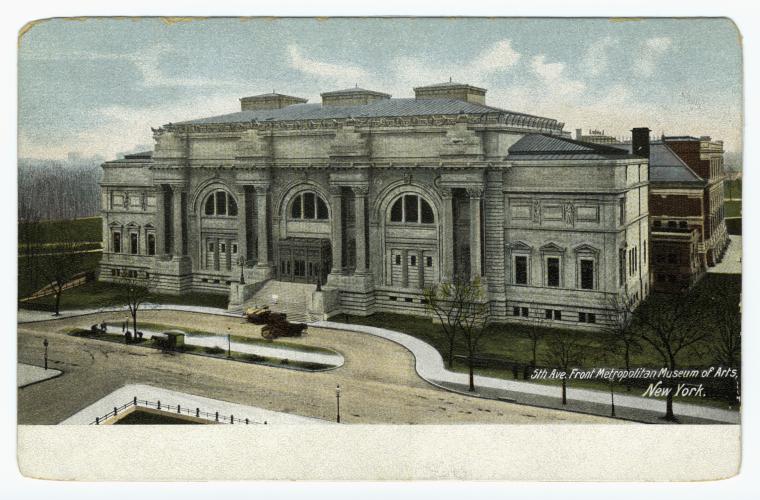
Some of the more ignored philanthropists like JP Morgan was because he didn't give money to the better well being of the United States, but rather to help in cultural expeditions. JP Morgan gave money to places like the Metropolitan Museum in New York. He turned the Metropolitan Museum from just another art museum to one of the most elaborate art museums in all of the United States.

JP Morgan was said to have an art collection that rivaled all the large art museums in europe. When he died all his art was donated to the Metropolitan Museum, making it the best art museum in the United States. JP morgan is less known for these donations to the culture of america because of how he helped the US government create several organizations like the Federal Reserve.
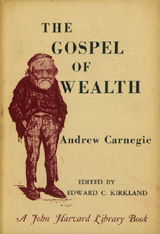
The united states will forever be changed by these few people, who gave most of their fortians to the United States. These extremely wealthy people believed it was their responsibility to make the world a better place than it was when they came into it. People like Carnegie believed in this the most, to the point where he wrote books on it like “The Gospel of Wealth” 
The United States will forever be reaping the benefits of the early days of the country and the people who gave up their fortians, for the improvement of their country, and tried to leave their mark on the world.
Work Sited
https://www.jstor.org/stable/23882495?seq=1#page_scan_tab_contents



A. I had no idea that so many of the wealthiest people donated a lot of their fortune for the betterment of the US and the betterment of the world
ReplyDeleteB. I want to learn more about what caused these millionaire to give away so much money because I would think that a lot of these people would have been to arrogant to give up their money.
C. Yes because he stated a lot of facts on what people did and donated to but he also touches on how it helped the US and how it impacted the world
1. I didn't know that Andrew Carnegie donated 90% of his fortune, including 2,000 libraries, to the United States.
ReplyDelete2. I want to learn more bout all of the huge donations that were provided by some of the biggest philanthropists of the 1900s. I think it's interesting how much they provided for the Unite States just with their wealth.
3. Yes this post is analytical because it goes into detail about many different philanthropists during the time period and how their ideals and success affected civilization and productivity in the Unite States.
A. I learned about how Carnegie was very into donating and helping out others. How he gave over 2,000 libraries to the United States to help people learn. I did not know that he gave so much to the country and how he impacted people around the whole country
ReplyDeleteB. I would like to learn more about philanthropists early life and childhood because you said that they donate because of experiences that they had in their earlier life, I would like to learn more on this because it would interest me to learn on how they came to donate so much for others and what made made them want to do it
C. I believe this post is truly analytical because it discusses what multiple philanthropists achieved and what they did with their life and money. It helped me learn a little more on what a philanthropist was and what they did.
A. I had no prior knowledge of hookworm at all. I did not know that it has existed and I'm impressed that such a big philanthropist like Rockefeller would help with the treating of this.
ReplyDeleteB. I want to know more about JP Morgan and his art collection that was so rare. This interests me because it seems that his art collection was one of the most rare in the world.
C. Yes I believe this to be truly analytical. This post is organized and stays with the same theme when talking about the different philanthropists.
a) One thing I didn't know about philanthropy in this time period was how unselfish some tycoons were back then
ReplyDeleteb) One thing I would like to know more about J.P Morgans contributions to the Metropolitan Museum
c) This post is partially analytical because it showed the main philanthropists in the area at the time and showed what they did, but conveyed no opinion.